




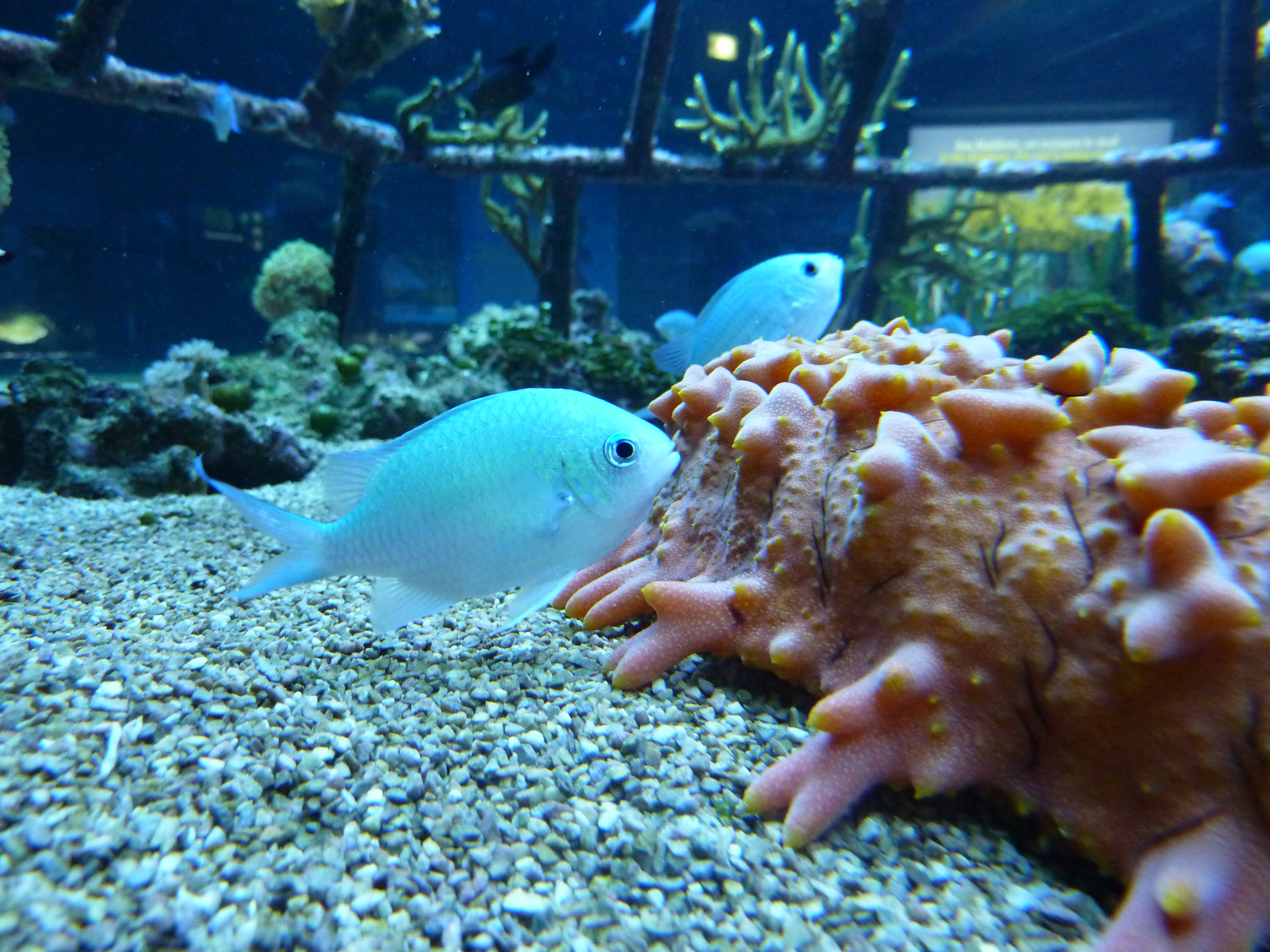
Chromis viridis is a very popular species in the marine aquarium trade, but breeding it remains particularly challenging, especially during the first weeks of life.
Copepods are essential for larval development due to their small size and high nutritional value. Having a reliable supply of high-quality copepods is one of the key factors for successful rearing.
After several years of research and development, we have successfully developed protocols that now allow us to raise several hundred individuals per batch. This is an important step for a species that is still largely supplied through wild collection.
Thanks to Planktae products, we can provide the planktonic resources required throughout the different stages of development, making large-scale production of this species possible.
Larval feeding relies on a succession of live prey adapted to the larvae’s increasing size and nutritional requirements. During the first 15 days, feeding is mainly based on copepod nauplii, using a mixture of Parvocalanus and Acartia. Rotifers are introduced at 10dph and provided until 30dph to ensure a gradual transition. artemia nauplii are introduced at 25dph, as the larvae’s predatory capacity increases. This strategy allows for an overlap between the different prey types and ensures continuous feeding until metamorphosis, around 40dph.
This achievement opens new opportunities for more sustainable Chromis viridis production and for reducing pressure on wild populations.